

- What is Muscular Hypertrophy ?
- Important Benefits and Potential Risks of Hypertrophy Training
- Proven Tactics for Building Muscle Mass
- What Does Muscle Hypertrophy Stimulate?
- Optimal Training Frequency for Muscle Hypertrophy
- Muscle Strength vs Hypertrophy Comparison
- Useful Tips to ImproveYour Results
- Final Thoughts
Bodybuilders and just people who practice fitness dream of gaining a few kilograms of pure muscle mass. However, there are many people who have been training regularly for several years, but their muscles don't grow the way they would like to. Is it due to genetics? Quite often, muscle tissues won't develop if training is not focused on hypertrophy.
Hypertrophy is a well-known term for professional athletes. However, there are a number of features and nuances to this topic that will be useful for anyone involved in sports disciplines to know. In this article, we will explain muscle hypertrophy definition, how it happens and effective strategies for training.
What is Muscular Hypertrophy ?

Muscle hypertrophy is the scientific and proper name for the process of muscle tissue enlargement. It refers to an increase in the volume, size, shape, and density of a person's skeletal muscles. This is what millions of athletes regularly attend the gym for, working hard there with heavy weights.
Unfortunately, hypertrophy is not about quick results. So, if you hear about tactics that will allow you to build muscle in 1 week, don't believe in this myth. Briefly speaking, heavy loads cause micro-injuries in the muscle tissue, and the body starts to produce more proteins. As a result, new muscle tissues grow faster, increasing in volume.
Important Benefits and Potential Risks of Hypertrophy Training
If you are involved in any of the strength sports, your workouts are predominantly hypertrophy-oriented. For example, bodybuilders choose exercises that can maximize the stress on the muscle compounds for growth. Here are the benefits of such workouts:
- The body becomes more aesthetically pleasing. Having a slim figure and pronounced muscles all over the body is a dream of most modern people.
- Growth in strength. Although hypertrophy and strength are not the same concepts, heavy loads also make your strength develop.
As statistics show, people with high muscle mass content are less prone to developing cardiovascular diseases. Despite all the above benefits, heavy exercise can have several unpleasant risks for your overall well-being and health.
First of all, training on hypertrophy can be potentially dangerous in the context of fatigue. This affects strength levels and the time required for normal muscle tissue recovery. As a consequence, such people have a risk of injury. Overloading the body can lead to tendon disease (tendinosis) and muscle tears. Many bodybuilders and other athletes often use injectable steroids to help muscles grow faster and minimize the risk of injury. However, you should be sure to consult with a sports doctor before using additional medications.
Proven Tactics for Building Muscle Mass
It's no secret that the main way to build muscle mass is through heavy exercise. Your goal is to moderately damage your existing muscles to speed up their recovery and growth. Some people pay thousands of dollars to personal coaches to help them reach their fitness targets. We've compiled the best strategies that professionals use to build muscle tissue.
Progressive overload The human body's feature is that it can adapt to different factors, so you should use progressive overload in your hypertrophy training. This strategy is all about straining your muscles by the concept that the body will adjust to the amount of pressure exerted on it. To make sure you are applying this particular principle, gradually raise the intensity of the weights, number of reps, or sets in a particular workout.
Choosing the right diet Obviously, many other factors, including nutrition, are important for normal muscle growth. Even the most rigorous of exercise sessions will fail to produce the much-needed outcome in the absence of nutrients. Concentrate on eating enough quality foods with proteins, complex carbohydrates, and fats preferred.
The role of steroid drugs As mentioned above, athletes often take courses of anabolic steroids to boost strength and muscle mass. This method really works well. However, you have to combine them with training, proper nutrition, and recovery.
What Does Muscle Hypertrophy Stimulate?
Besides the question «what is muscle hypertrophy», beginner athletes also often wonder how it works. It is no secret that the human body is a complex system where most elements interact with each other. As surprising as it may be, the process of hypertrophy begins with stress and injury to the muscle tissue. Your muscles are literally torn at the cellular level by physical exertion, such as lifting dumbbells.
The body quickly realizes that one of the elements has been injured and needs help. That's why it accelerates the production of proteins that are important for muscle growth. All these factors contribute to cell regeneration and cell enlargement.
Optimal Training Frequency for Muscle Hypertrophy
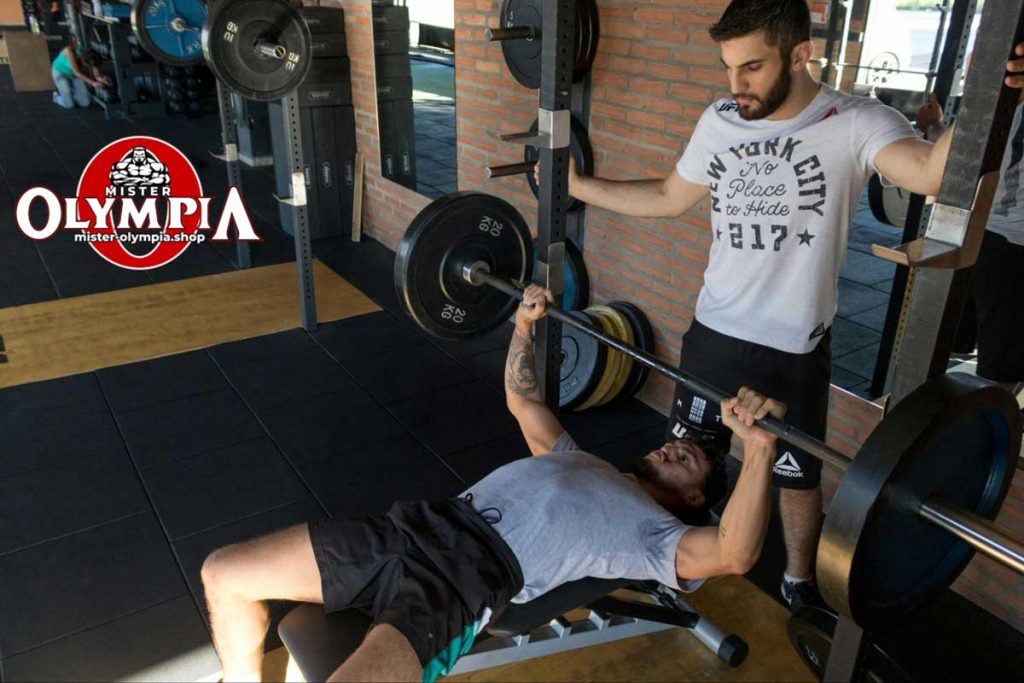
Certainly, one of the most popular questions we hear from beginners is, «how many workouts will I need per week to hypertrophy my muscles»? This is quite a difficult question, as a lot depends on your level of training, experience, and ultimate objectives.
Scientists have conducted research to understand the optimal training frequency for hypertrophy. They found that, on average, people need two full workouts per week. Typically, many athletes go to the gym three times a week, each time focusing on a different muscle group.
Muscle Strength vs Hypertrophy Comparison
Most newbies think that muscle strength and size grow proportionally through regular visits to the gym. However, this is not the case at all. Simply speaking, hypertrophy and strength-oriented training are two different approaches.
The most significant difference is the number of sets, reps, and weight of the loads. For training for muscle hypertrophy, it is common to do no more than 5 sets of 10-12 repetitions. In turn, muscle enlargement does not need a large number of repetitions. Such athletes are usually limited to 2-5 repetitions. However, there are still similarities between these approaches. When you train for hypertrophy, your muscles, in any case get a slight increase in strength and on the contrary.
To make it clearer to you how muscle strength and hypertrophy differ, look at powerlifters and bodybuilders. Both of them regularly attend the gym and lift heavy weights. However, powerlifters focus on fewer reps and boundary weights. This allows them to increase their strength performance. For bodybuilders, muscle growth is important, so they use more number of workouts for hypertrophy.
Useful Tips to ImproveYour Results
We have already talked above about proven strategies that help you build your workouts with a focus on hypertrophy. However, will this be enough to maximize the effects? Leading athletes utilize all methods that maximize training performance by adhering to these principles:
- Proper technique is the key to success. The technique lies at the center of all exercise routines and must be conducted correctly. Otherwise, there is no sense to train at all. In the context of muscle mass, it is not simply a question of how many reps and sets all are achieved. This is about your movements, the quality of your movements, and the effectiveness of your movements matter.
- Plan your workouts in advance . It helps to think of your workout plan as the road map to getting to where you want to be within muscular hypertrophy. Therefore, you must plan your training schedule in advance, depending on the long-term goals.
- Don't forget about correct recovery . Muscle hypertrophy requires an ample amount of rest and recovery so that muscles have time to infill the created micro-tears. You should also get a good night's sleep so that your body has time to recover from exertion.
You must realize that you will only be able to achieve significant muscle growth if you follow all the main principles of hypertrophy training.
Final Thoughts
Hypertrophy is what many people describe as an increase in muscle mass. Undoubtedly, this is the effect that many athletes from all over the world want to achieve. Therefore, you must have a clear strategy and follow every point of your plan. This should cover proper exercise technique, optimal number of repetitions, healthy diet, and recovery process.